A few days before Mother’s Day, I was standing inside a small footwear shop in a Tier 2 market. It was not a fancy store. It was the kind of shop you see in almost every Indian city. Packed shelves, cartons behind the counter, customers walking in and out, and one family member sitting near the billing area while quietly observing everything happening inside the shop.
To most people, this shop may look ordinary. But anyone who has spent time in India’s offline retail markets knows that some of the sharpest business decisions are made inside these shops every day. There are no large dashboards, no research decks, and no formal planning rooms. But there is experience. There is customer memory. There is instinct. There is a deep understanding of what sells and what gets stuck.
That day, the retailer’s son was checking women’s footwear stock for Mother’s Day. He was looking at bright colours, stylish straps, and slightly fancy designs. His thinking was natural. Mother’s Day means gifting, and gifting usually feels like something attractive and special.
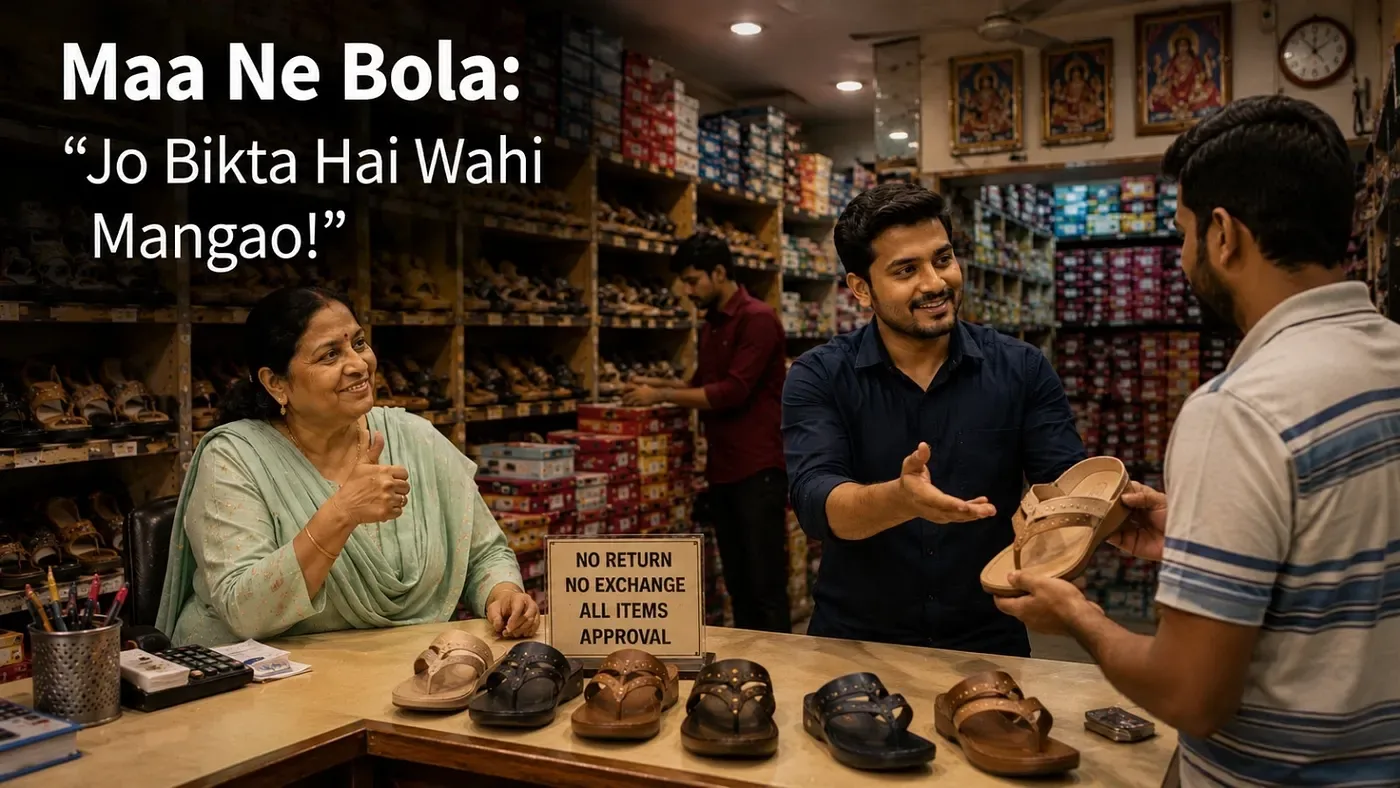
He picked one design and said, “Yeh Mother’s Day ke liye achha chalega.” His mother was sitting at the counter. She was not speaking much. She was not looking at any report. But she was watching the stock carefully. After a few seconds, she said, “Yeh fancy wala thoda chalega. Maa ke liye log comfort poochte hain. Simple colour, soft sole, sahi size, yahi bikega.”
That one line stayed with me. Because it was not just a mother giving an opinion. It was market intelligence coming from the counter of a small Indian retail shop.
Maa Was Reading The Market
In many Tier 2 and Tier 3 family run shops, Maa is not just present in the background. She is one of the sharpest observers in the shop.
She knows which size sells first. She knows which colour looks good on display but does not move. She knows which product women pick up, touch, ask the price for, and then quietly keep back. She may not call it demand planning or assortment intelligence, but she understands demand.
This is the part many people sitting outside the market often miss. A retailer does not buy stock casually. Every product on the shelf is money. Every wrong size is stuck money. Every slow moving design blocks cash. Every wrong buying decision hurts.
In footwear and apparel, customers do not buy only from a photo. They touch the product, check comfort, compare price, ask for size, and think whether it will work in daily use. And when the product is being bought for a mother, the decision becomes even more practical. It is not only about what looks fancy. It is about what feels right.
Then A Customer Walked In
While I was still there, a customer entered the shop. He looked slightly rushed, like many last minute gift buyers do. He said, “Bhaiya, Maa ke liye sandal dikhana. Comfortable ho. Zyada fancy nahi.”
The retailer’s son looked at his mother. She did not say anything. She just smiled a little. Because she had already said the same thing a few minutes earlier.
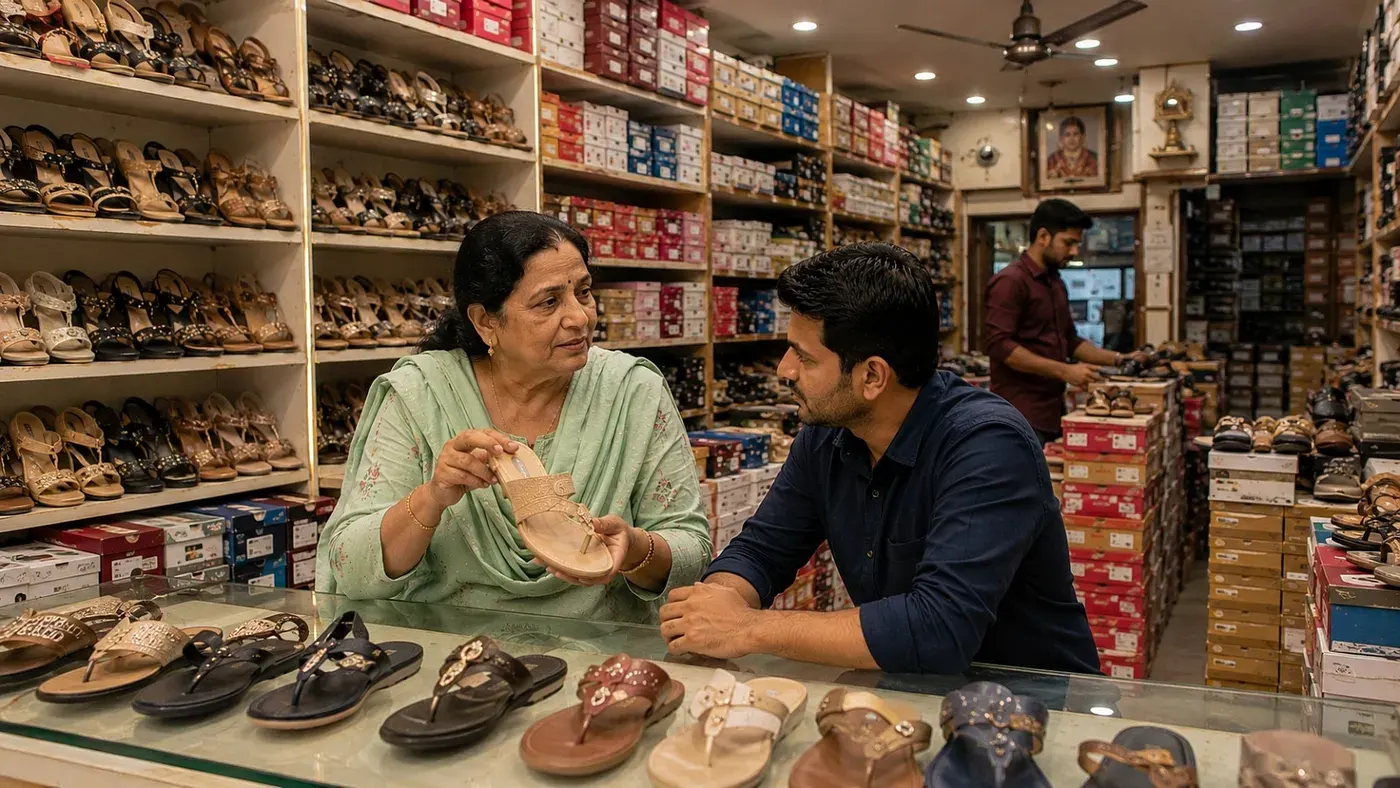
That moment made the whole conversation real. This was not theory. This was not a campaign thought created in a meeting room. This was exactly how demand appears in Indian retail. Quietly, suddenly, at the counter.
The retailer had a few options, but not enough of the right sizes and comfort designs. Earlier, this could have become a missed sale. The customer may have gone to another shop. The retailer may have said, “2–3 din bad aa jana.” But Mother’s Day gifts do not wait for tomorrow.
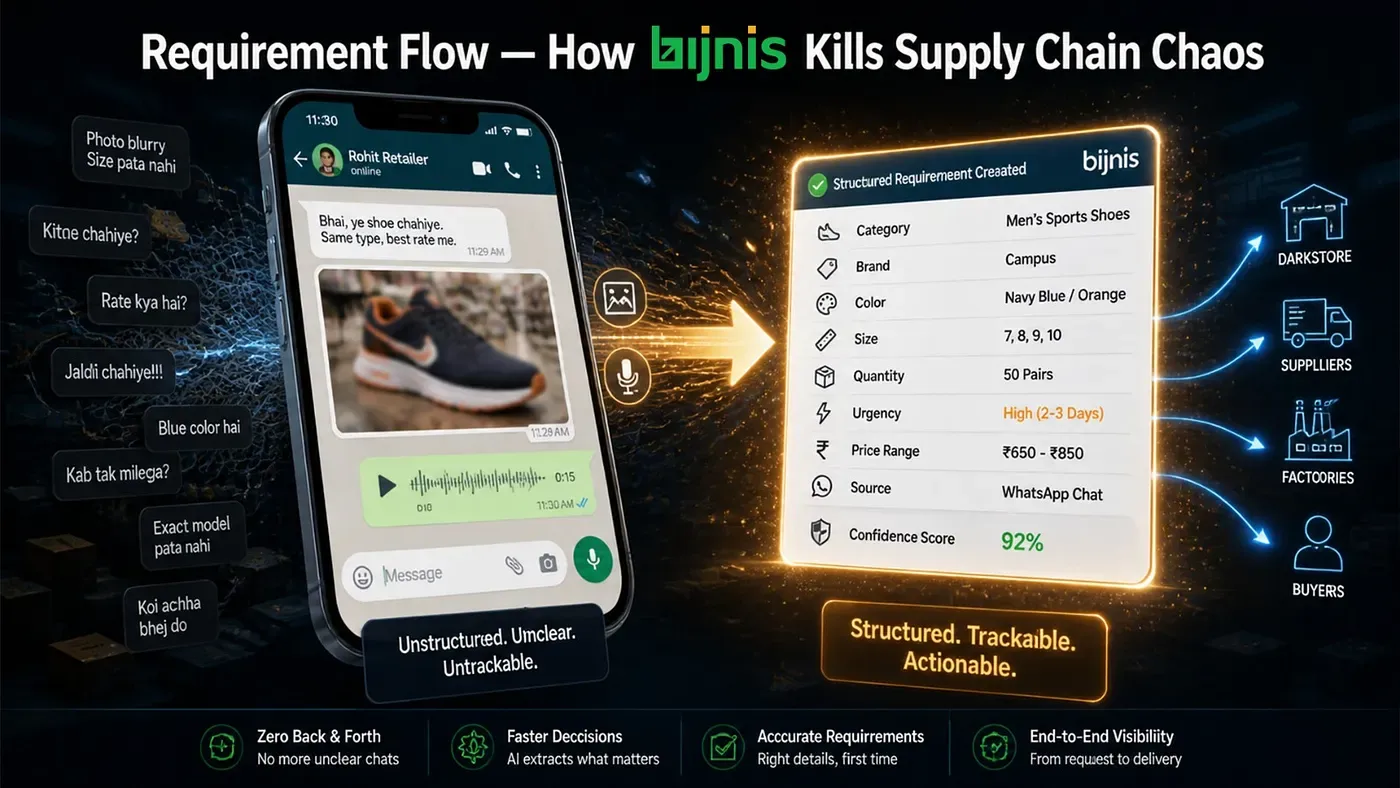
So the retailer checked bijnis and placed an order for women’s comfort footwear. Not the flashiest products. Not the loudest designs. He ordered what made sense for that market and that moment. Simple colours, practical designs, fast moving sizes, and comfortable footwear someone could confidently buy for his mother.
I Waited Till The Delivery Happened
I stayed back because I wanted to see what happened next.
Around 30 minutes later, the stock reached the shop. The box opened. The retailer checked the pairs. His mother picked one up, pressed the sole with her hand, looked at the colour, and said, “Haan, yeh chalega.”
The customer who had stepped out nearby came back. The retailer showed him the fresh options. After a few minutes, he selected a simple, comfortable pair. Nothing dramatic happened. No big speech. No emotional background music. Just a small smile on the customer’s face when he said, “Bas yeh pack kar do. Maa ko pasand aayega.”
And honestly, that smile explained B2B Quick Commerce better than any dashboard. Because the impact was not just that stock arrived fast. The impact was that the right stock arrived fast enough to turn live demand into a sale.
That Is The Real Meaning Of B2B Quick Commerce
Many people hear quick commerce and immediately think of speed. In B2C, that makes sense. A customer wants milk, chips, shampoo, ice cream, or a phone charger. The product is already clear. The main job is to deliver it fast.
B2B is different.
In B2B footwear and apparel, the retailer is not buying for himself. He is buying for future customers. He is taking a risk with his own money. If the product sells, his cash rotates. If it does not sell, his money gets blocked.
That is why B2B Quick Commerce cannot be only about reaching the shop in 60 minutes. Speed matters, but only when the assortment is right. If the wrong product reaches fast, it does not help the retailer. It only becomes dead stock faster.
The real question is not only, “How fast can we deliver?”. The deeper question is, “What should the retailer buy right now?”
The Smile That Explained The Model
That day, the answer came from Maa sitting at the counter. She understood the demand before anyone called it data. bijnis helped convert that signal into available stock within around 60 minutes.
This Mother’s Day, I did not just see a retailer preparing for gifting demand. I saw how Indian retail actually works. I saw how family run shops make buying decisions. I saw how demand is understood on the ground. And I saw why B2B Quick Commerce has to be built differently for India.
Because here, the market does not move only by data. It moves by experience, trust, touch, instinct, and relationships. Sometimes, the sharpest demand signal in the shop comes from Maa. And sometimes, the real impact of 60 minute delivery is not measured only by speed. It is measured by a retailer saving a sale, a customer finding the right gift, and one small smile at the counter.
Maa demand samajh jaati hai. bijnis us demand ko 60 minutes mein shelf tak le aata hai.
Thanks
Written by Suyash Jain