For years, India’s footwear and clothing retail market has operated on an old rhythm. Retailers travelled to wholesale markets, bought in bulk, estimated future demand, and locked working capital into inventory. It was a model built for a slower era, when trends moved gradually and supply delays were accepted as normal.
That market has changed.
Today, customer preferences shift quickly. A design that sells this week may cool next week. Shoppers expect freshness, variety, and availability every time they enter a store. Yet lakhs of neighbourhood retailers still depend on supply chains where sourcing can take days, sometimes weeks. This is the real gap in Indian retail today — not demand, but speed of supply.
And that is where bijnis is changing the game.
The Hidden Cost of Slow Supply Chains
Most independent retailers understand their customers extremely well. They know which styles move, what price points work, and what trends are building locally. Their challenge is rarely selling skill. It is getting the right stock at the right time.
When supply moves slowly, businesses pay the price in multiple ways.
Cash gets trapped in excess inventory because retailers buy more than they need out of fear of running out later. Customers walk away when fast-moving products are unavailable. Wrong assortments sit on shelves until margins disappear through discounting. Valuable selling time is lost in market visits, sourcing calls, and procurement runs. In footwear and apparel, where sizes, colours, seasons, and trends change constantly, delay becomes expensive.
Why Fashion Retail Needs Quick Commerce Too
Quick commerce changed customer expectations in consumer markets. People now expect speed, convenience, and instant fulfilment. But one category has been overlooked: retailers.
Why should a consumer receive grocer ies in minutes while a retailer waits days for products they need to run their business?
A footwear retailer selling out of a trending sandal should be able to refill the same day. A clothing shop seeing sudden festive demand should not lose two weekends waiting for fresh stock. A local store should have access to fast, reliable sourcing just like modern consumers have access to fast delivery. That is the idea behind B2B Quick Commerce.
And bijnis is bringing it to India’s retailers.
How bijnis Is Rebuilding Factory-to-Retail Commerce
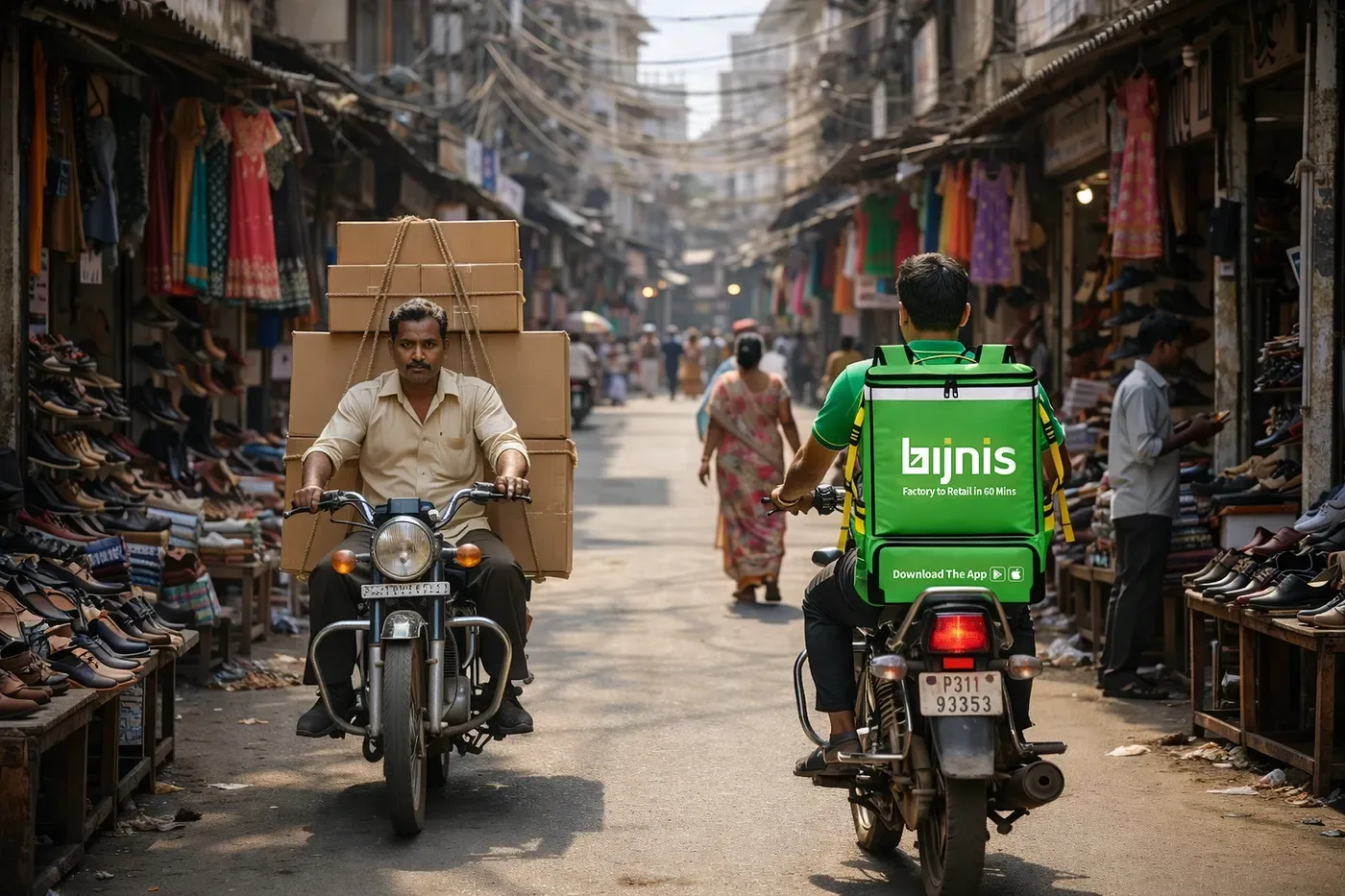
bijnis is building a technology-led Factory-to-Retail network designed around one clear belief: retailers should not wait days or weeks for stock that is already available.
By combining sourcing technology, real-time demand signals, and local fulfilment infrastructure, bijnis is enabling 60-minute delivery for retailers in active markets. This changes retail economics.
Instead of buying heavy once or twice a month, retailers can source in smaller, smarter, faster cycles. Instead of blocking money in excess stock, they can rotate working capital more efficiently. Instead of missing demand due to stock-outs, they can replenish while demand is still live.
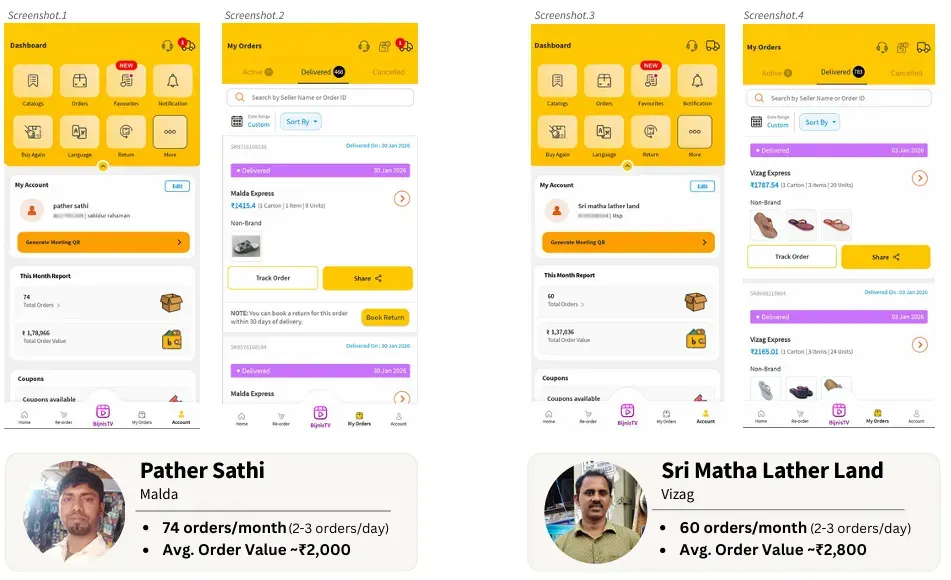
We can clearly see a behavioural shift: retailers who earlier bought only a few times a month are now purchasing far more frequently through the bijnis ecosystem.
Why This Matters for Footwear and Clothing Stores
Footwear retail depends heavily on fast-moving sizes, colours, seasonal demand, and occasion-led buying. One missed replenishment cycle can cost multiple sales.
Clothing moves even faster. Prints, fits, fabrics, festive trends, and local tastes can shift rapidly. Retailers who refresh often appear stronger, newer, and more relevant to customers. Retailers who cannot refresh regularly usually fall into one trap: competing only on price.
That is rarely sustainable.
The Future Belongs to Faster Retailers
The next winning retailer in India may not be the biggest store in the market. It may be the fastest one. The retailer who can sense demand early, replenish quickly, keep inventory lean, and stay fresh week after week will outperform larger competitors operating on slower systems.
India does not need fewer neighbourhood retailers. It needs stronger ones powered by smarter supply. The next chapter of footwear and clothing commerce will not be written only by malls, marketplaces or giant brands. It will be written by lakhs of local stores that gain the power of quick commerce. When retailers get access to stock in 60 minutes, they stop surviving season to season.
They start compounding. And that is the future bijnis is building.
Thanks
Written by Suyash Jain